Across Tanzania, people experience gaps in public services every day. Community radio journalists have the power to connect these experiences with those responsible for delivering services. Through Amka Tuongee, WAJIBU, with support from the National Endowment for Democracy (NED), equipped 23 community radio journalists with skills to analyse CAG audit reports, use data, investigate service delivery gaps and confidently question public officials. The difference lies in how they tell the story. By bringing together evidence from audit reports and the lived experiences of citizens, journalists can uncover service delivery gaps, investigate how public resources are used and bring local concerns into conversations with those responsible for addressing them.
How Local Radio Brings Community Concerns to Light and Strengthens Accountability
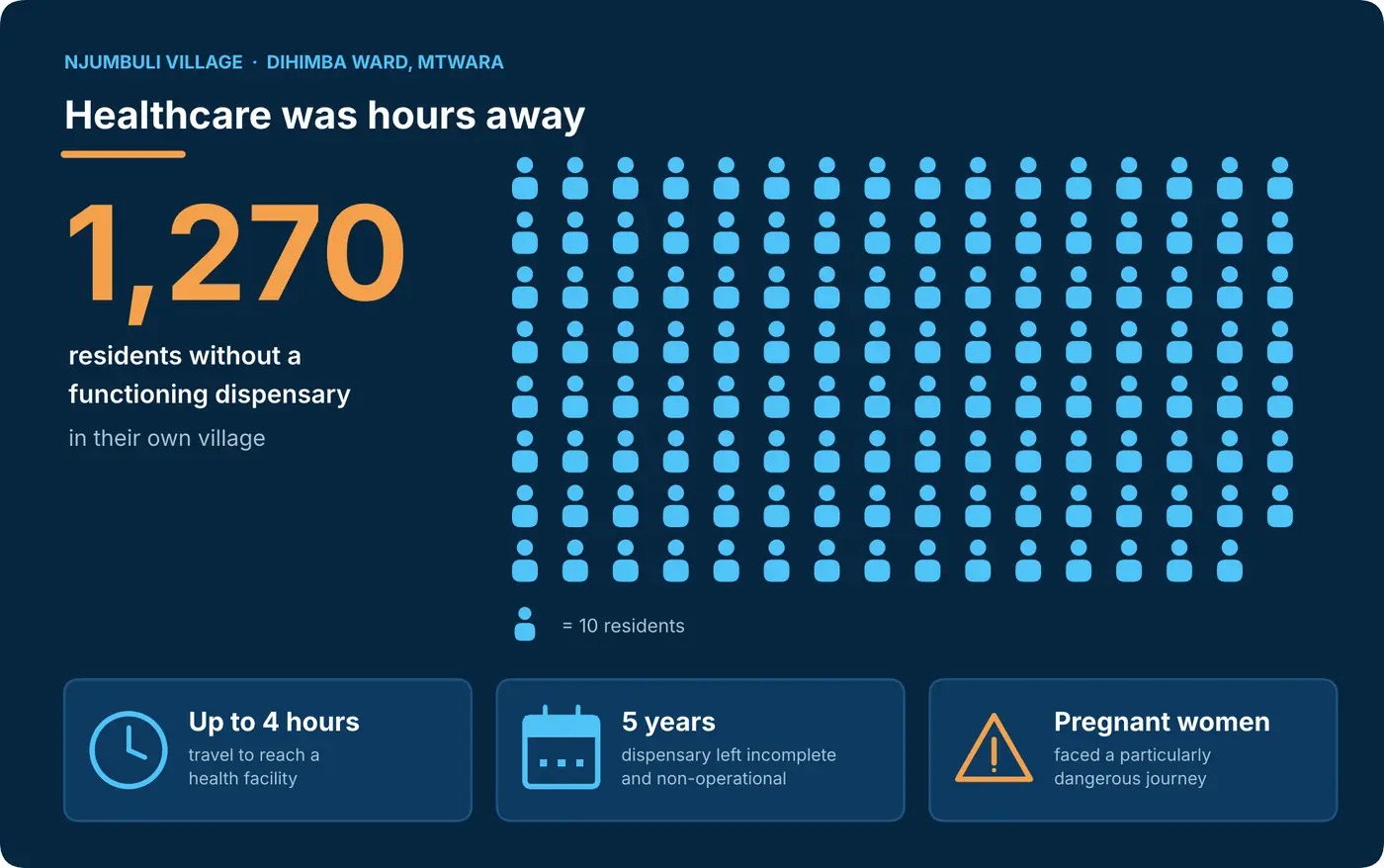
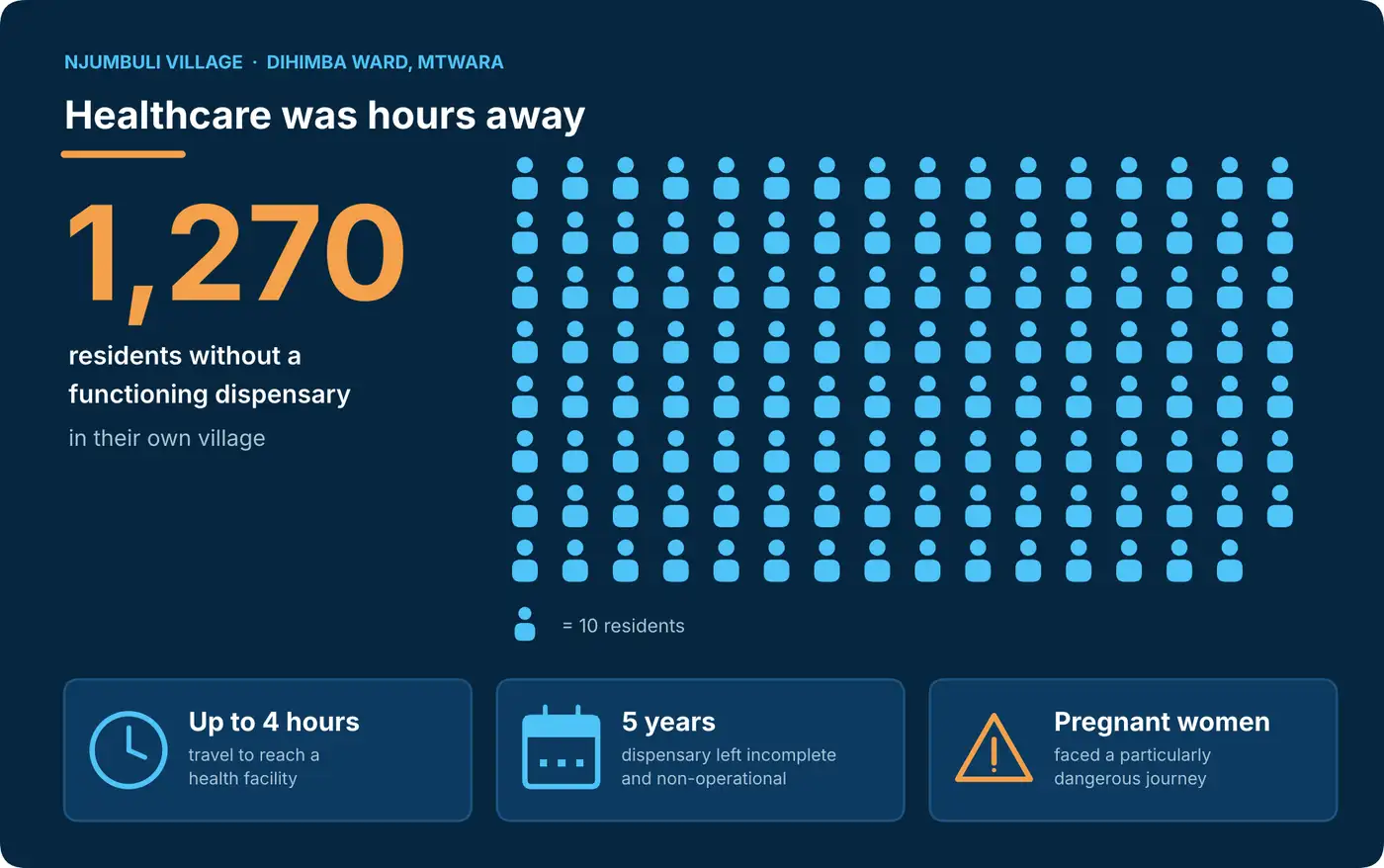
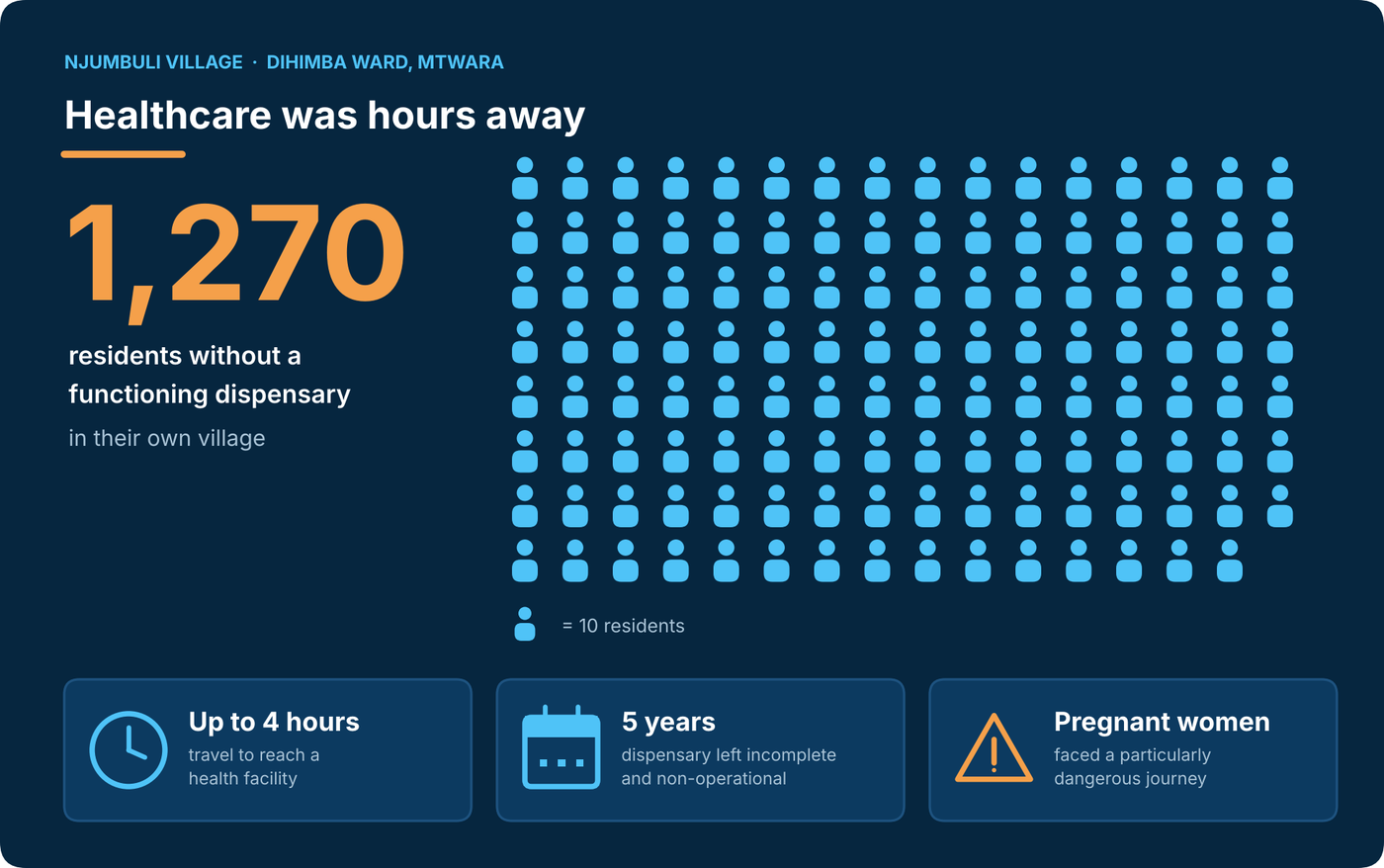
1,270
residents once travelled up to four hours for care
62M
TZS (50M + 12M) used to finish the dispensary
8 of 10
outlets now run their own CAG-based programmes
15M
people reached through the partnership
For the community in Njumbuli village in Dihimba Ward, Mtwara, accessing basic healthcare once meant travelling for hours to reach a health facility. The village had begun constructing its own dispensary through community efforts, but the building remained incomplete and abandoned for five years.
WATCH THE VIDEO DOCUMENTARYSee these stories on screen: tap or click to watch
01The long road to care
For years, residents of Njumbuli village in Dihimba Ward, Mtwara, faced a difficult journey whenever they needed healthcare. With no functioning dispensary in their village, people had to travel long distances to reach health services. For pregnant women, the journey could be particularly dangerous.
“Before, we had a very big challenge. The hospital was far away. A woman could go into labour on the way. Some women even died on the way,” says Maisara Funga.
Mohamed Mchika recalls how distressing it was to be separated from his wife and newborn child, and for the baby to be apart from the mother.
“I was deeply hurt as a parent. I was concerned about my wife’s health and the baby had not yet received breast milk. It was very difficult. I stayed for almost three days before the baby was reunited with the mother,” he says.
Their experience was shared across the village. Approximately 1,270 residents had to travel for up to four hours to access healthcare services.
It was this situation that journalists from Pride FM set out to investigate, after examining reports from the Controller and Auditor General (CAG) and following up on the condition of the dispensary.
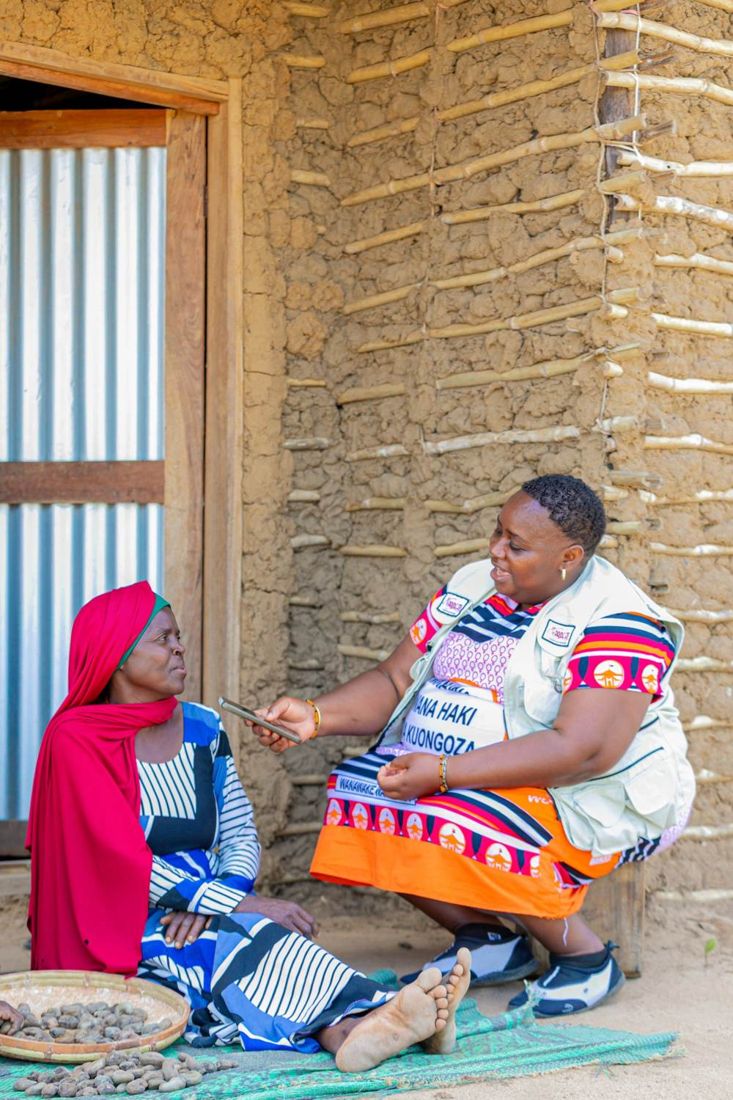
“A woman could go into labour on the way. Some women even died on the way.”
Mary Mpandula, a journalist with Pride FM, says the training provided by WAJIBU Institute of Public Accountability helped her use CAG reports to investigate development projects and follow up on issues affecting communities.
“Following the training provided by WAJIBU, I can now use reports issued by the Controller and Auditor General to monitor development projects and contribute to positive change in the community. One such case involved Njumbuli Dispensary, where we conducted follow up visits and found that the dispensary had remained abandoned and non-operational for five years. Pride FM played a key role by visiting Njumbuli in Dihimba Ward and identifying the lack of access to the dispensary,” Mary explains.
The reporting brought the situation to the attention of local authorities. Abeid A. Kafunda, Executive Director of Mtwara District Council, explains how the dispensary was eventually completed.
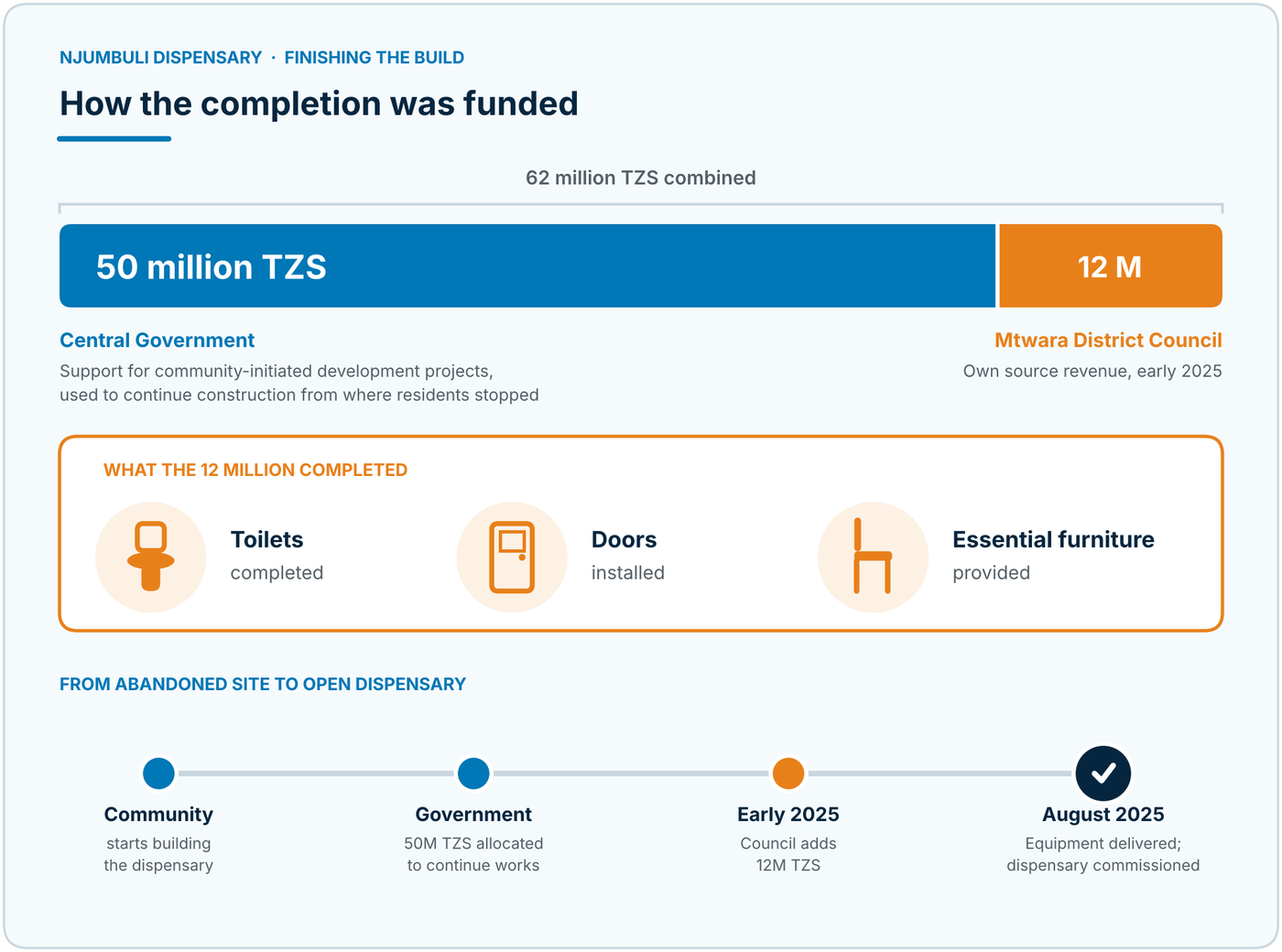
“Despite the Government’s policy objective of ensuring that every village has access to basic healthcare, the community had initiated construction of the dispensary through its own collective efforts but was unable to complete it. Following the identification of this challenge, we formally petitioned the central Government to support the completion of the dispensary. Under the Government arrangement for supporting community-initiated development projects, 50 million Tanzanian shillings was allocated to continue construction from where the community had left off,” Kafunda says.
However, the allocation was not enough to complete the facility. In response to the continued need for healthcare services, Mtwara District Council allocated a further 12 million Tanzanian shillings from its own source revenue in early 2025.
“The funds were used to complete the toilets, install doors and provide essential furniture for the dispensary. The completion brought great relief and joy to the community. In August 2025, medical equipment and supplies were delivered, and the dispensary was officially commissioned and began providing services,” he explains.
The result is a dispensary that now serves the village. Today, people can access most basic healthcare services within their village. Dr Camilius Tyba, Head Doctor at Njumbuli Dispensary, says the facility has reduced the need for families to travel elsewhere for routine treatment.
“Since healthcare services became operational, most basic healthcare services are now available within the village. Patients are referred to other health facilities only when specialized care is needed. Otherwise, they can receive most of the services they need here,” Dr Tyba says.
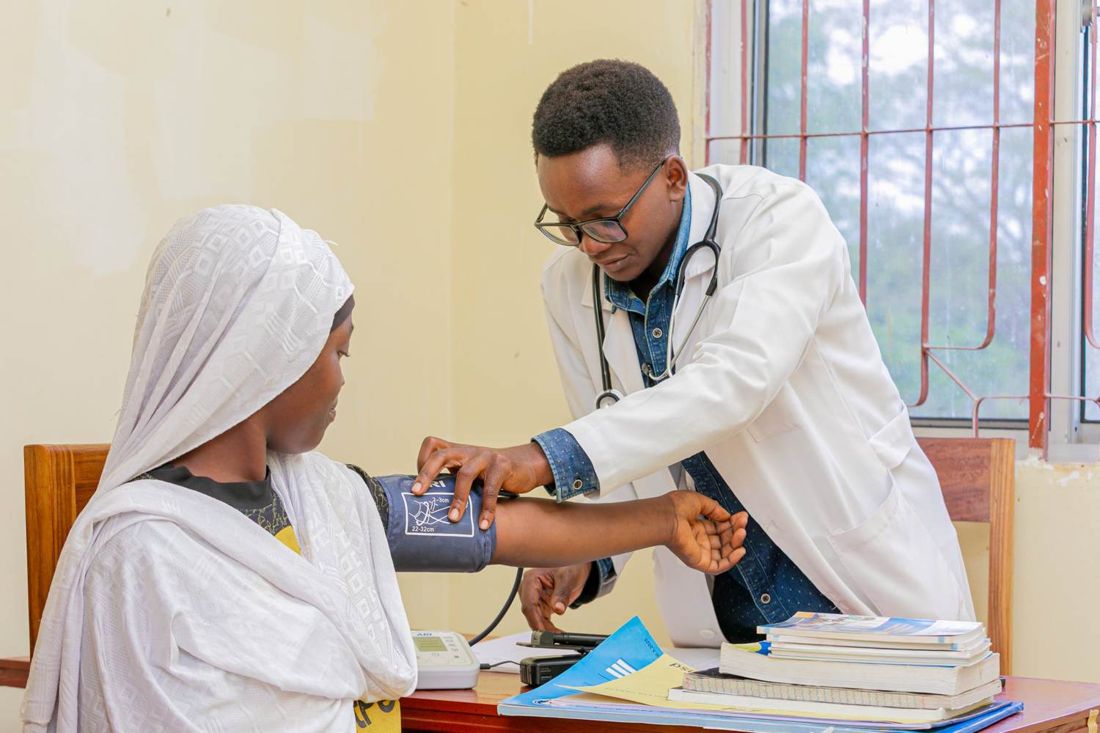
Residents can now receive basic healthcare services within the village.
For the community this has made a significant difference. Ismail Makame of Njumbuli village puts it simply:
“This has significantly improved timely access to healthcare for the community.”
The council executive director also acknowledges the role of local reporting in bringing the issue to attention.
“The media plays a vital role in promoting public accountability by identifying issues affecting communities.”
“The media plays a vital role in promoting public accountability by identifying issues affecting communities. The journalists maintained regular communication with us throughout the process. I appreciate their role in bringing this issue to our attention and contributing to the completion of the project,” says Kafunda.
The Njumbuli story shows what can happen when a CAG finding is matched by persistent local reporting. It is not the only place where this has happened.
02Raising concerns beyond healthcare
The Njumbuli story is one example of how local radio reporting can help communities bring service delivery challenges into public discussion. The same approach was applied to waste management at Soweto Market in Mbeya, where, after assessing CAG findings, Heneliko Malo of Bomba FM investigated concerns about the collection of waste at the market, where trash was sometimes left for up to two weeks.
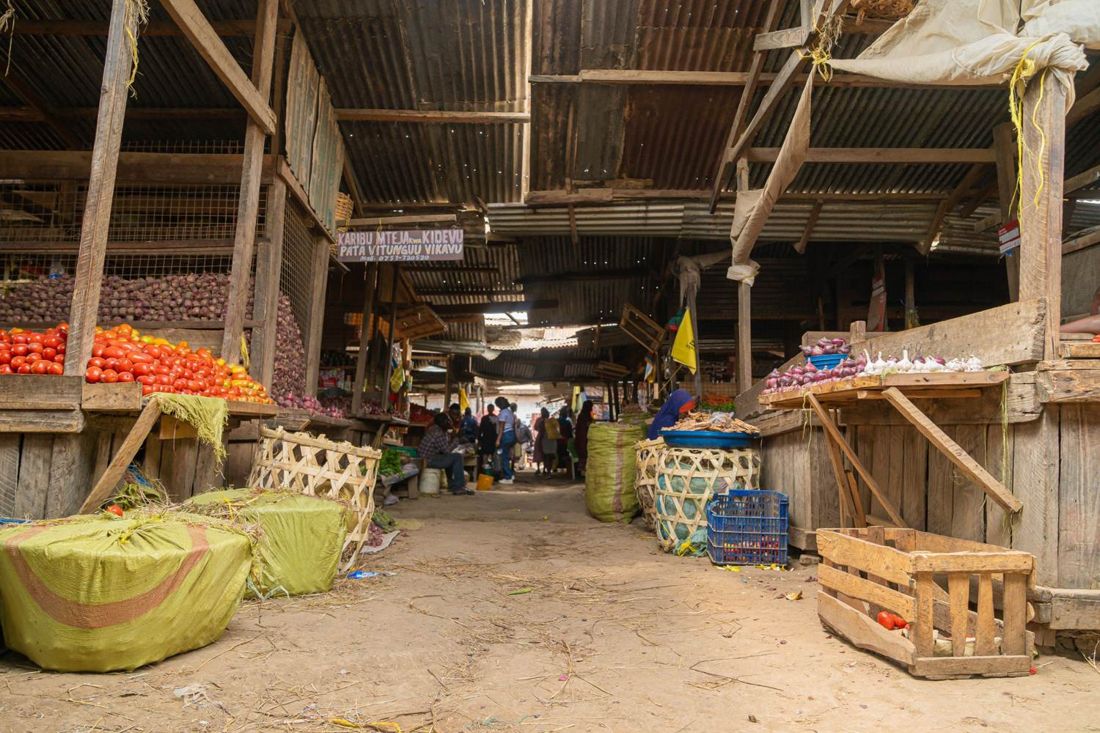
Silvia Nyalanga, a trader at Soweto Market, describes the situation before the reporting and subsequent follow up.
“Previously, waste management was a major challenge. Trash would accumulate at the market because of delays in collection. When waste piled up, it became difficult to collect everything at once,” she says.
Fredy Amani, Chairperson of Soweto Market, says that although the Municipal Council had vehicles assigned to collect waste, the service was unpredictable.
“Although the Municipal Council had vehicles assigned to collect waste, service delivery was unpredictable due to recurring operational challenges. I cannot say with certainty whether this was caused by an inadequate number of vehicles or high demand for waste collection. Bomba FM helped amplify the issue. I believe the increased public attention and follow up contributed to the progress we are witnessing now. It also pushed us to take steps to manage the situation ourselves, to protect our businesses and safeguard our customers,” Amani says.
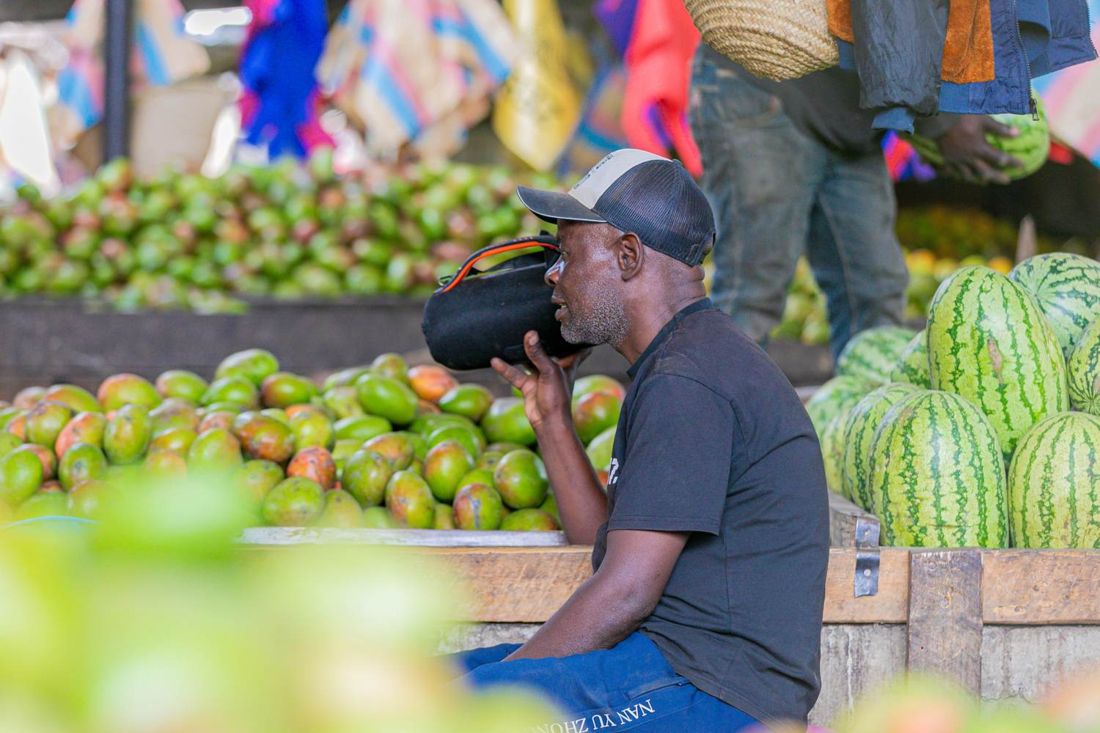
“Bomba FM helped amplify the issue. I believe the increased public attention and follow up contributed to the progress we are witnessing now.”
Traders say the market environment has since improved. Silvia Nyalanga notes:
“In terms of hygiene and waste management, cleanliness in the market has improved significantly compared to the past. Previously, the market environment was challenging, both for traders and customers. The situation is different now. As you can see, waste is no longer scattered around the market as it was before.”
“As you can see, waste is no longer scattered around the market as it was before.”
Shemsheree Simtioe, another trader at the market, says the improved environment makes it easier for customers to access goods and services.
“The market now provides a cleaner and safer environment where customers can access the goods and services they need. Market operations are more conducive. We appreciate Bomba FM’s regular visits and continued follow up on the challenges facing the business community, including reaching local leaders and authorities,” Simtioe says.
Amani also acknowledges the response from public authorities following the reporting.
“I am sincerely grateful to Bomba FM for amplifying the concerns of market users. I also appreciate the Government’s response through the media reporting and follow up. The Government was prompted to review the performance of the service provider contracted to provide waste management services, contributing to improved cleanliness in the market. I encourage Bomba FM to continue reporting on a broader range of issues affecting communities,” he says.
That call for broader coverage reflects a wider pattern. The same approach has helped bring attention to concerns well beyond the market.
03Bringing other community concerns into the conversation
One of them is unreliable water supply in Mkwajuni, Songwe. Community members described having to travel long distances or collect water from temporary sources, including wells dug in dry riverbeds. Some said they shared these water sources with animals, raising concerns about safety and waterborne diseases.
Roza Mausuma described the conditions they had experienced:
“We used to suffer a lot because we were using the same water as animals. When we went to collect water, animals also passed through those places. Diseases were a problem, especially cholera.”
The shortage also placed an additional burden on women, who often had to spend considerable time searching for water. Roza says the situation has become less difficult:
“The availability of water has reduced the burden of struggling so much to find it. As women, we thank the Government for taking the buckets off our heads. We also thank Bomba FM because they have been a great support in speaking out about the water problem.”
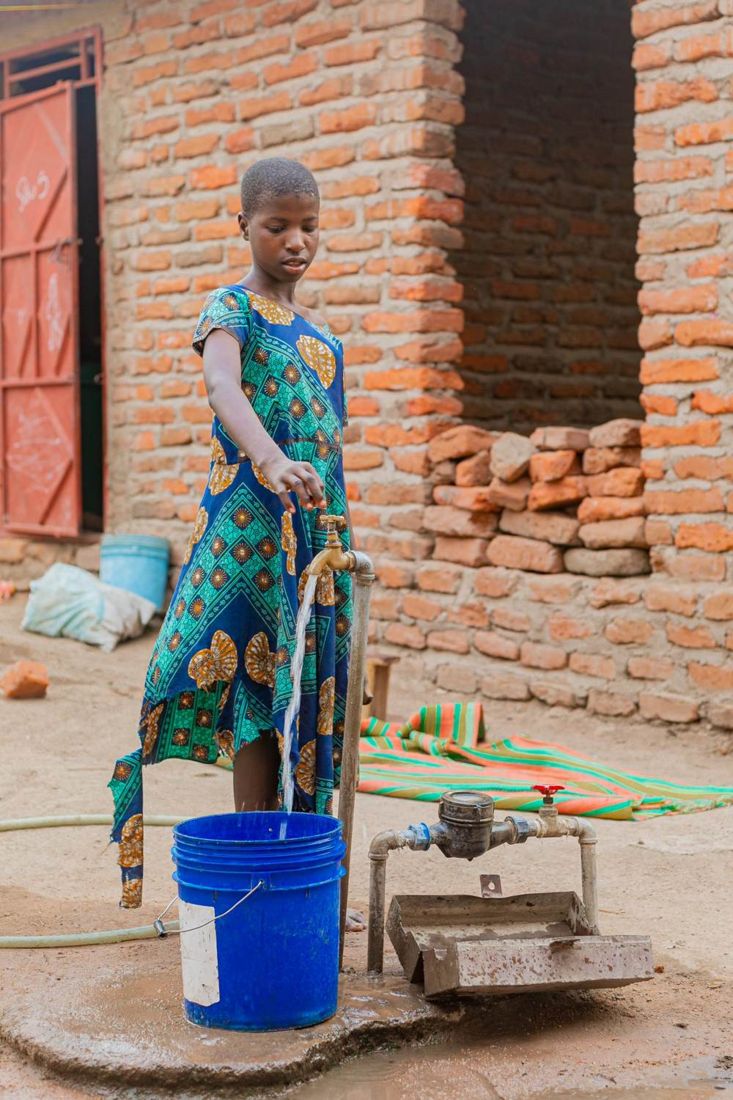
“As women, we thank the Government for taking the buckets off our heads.”
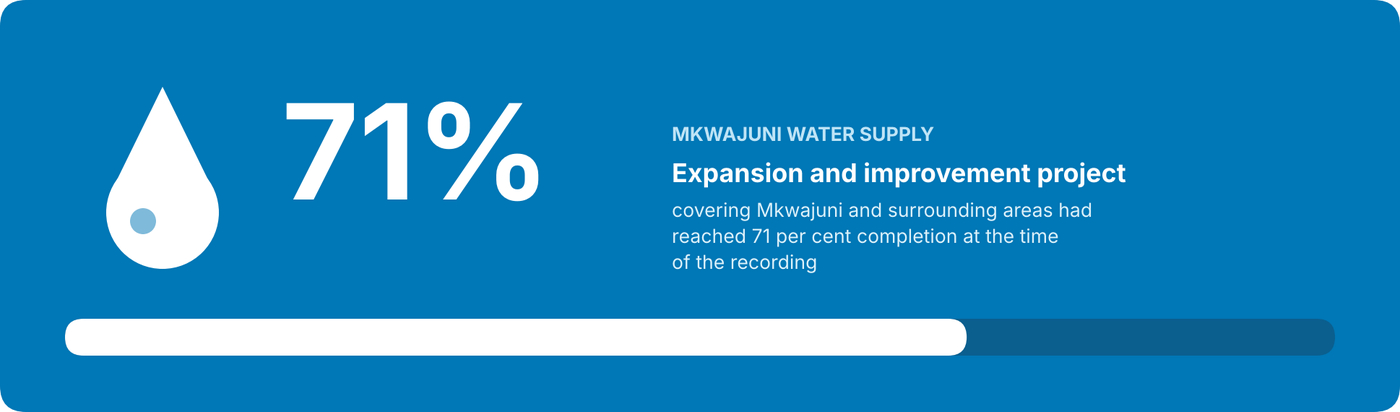
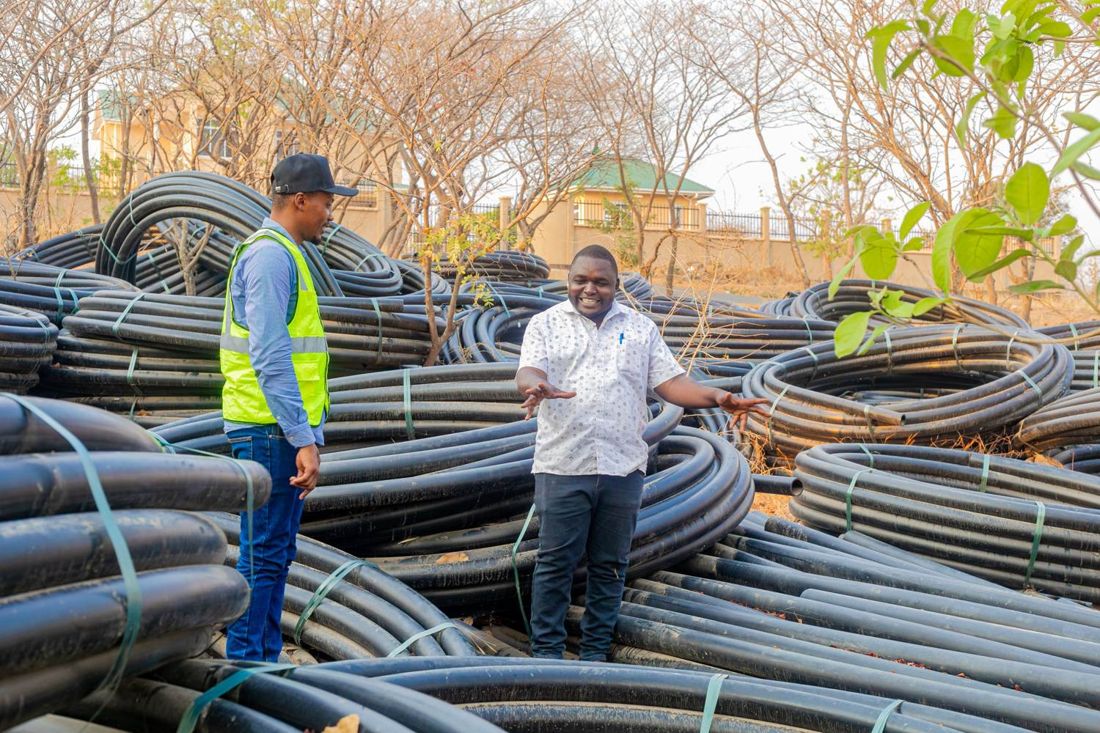
Shaibath Kapingu, Ward Executive Officer of Mkwajuni, explained that demand had grown as Mkwajuni’s population increased, while existing infrastructure struggled to keep up. The official said an expansion and improvement project covering Mkwajuni and surrounding areas was under way and had reached 71 per cent completion at the time of the recording.
04Keeping community concerns on the agenda
The same method of checking reports against what communities experience took reporters to Rukwa, where accountability reporting has brought attention to challenges facing students with special needs at Mkamanye Primary School. A CAG report indicated that the school’s dormitory had been completed, but a field visit by journalists from Ndingala FM established that it was still incomplete and lacked essential items, including beds and mattresses.
For students, the dormitories are important because they reduce the difficulties associated with travelling between home and school.

Dormitories give students with special needs a place to stay at school.
Deus Nandi, a student at Mkamanye Primary School, says the completed dormitories will make a real difference to his fellow students.
“Before the dormitories, some of my fellow students faced challenges travelling between home and school which often affected their ability to arrive at school on time. With the dormitories now completed, they will no longer face these challenges. They will be able to arrive at school on time and dedicate more time to their studies.”
Evodia Ethani, another student, explains that the accommodation will allow students with special needs to remain at school throughout the year.
“These dormitories will enable our fellow students with special needs to remain at school during both the rainy and dry seasons.”
The school’s head teacher, Pascal Tusoke, commends Ndingala FM for bringing the issue into public discussion.
“One of the major challenges was ensuring that learners with special needs have equitable access to quality, inclusive and accessible learning environments. We commend Ndingala FM for bringing these challenges to public attention. By highlighting the issue, the media creates an opportunity for stakeholders to come forward and support the school,” he says.
Shamsi Daddy, Acting Information Officer at Sumbawanga District Council, also recognizes the role of media in drawing attention to development challenges.
“I appreciate Ndingala Media for its continued collaboration and contribution particularly in the Rukwa Region and in supporting our institution. They have consistently brought various challenges to public attention. These issues may already be known to relevant stakeholders but media coverage helps bring them to the attention of the Government, creating opportunities for timely intervention and completion of development projects so that communities can benefit from these investments,” Daddy says.
05Building a lasting role for local media
From Njumbuli to Mkamanye, these examples share a common source: Amka Tuongee, a programme implemented by WAJIBU with support from the National Endowment for Democracy (NED). Through the programme, journalists have been trained to analyse CAG reports, examine public development projects, use evidence in their reporting and engage the authorities responsible for public services.
Through this partnership the project has reached an estimated 15 million people.
The programme’s sustainability is also reflected in what participating radio stations are doing beyond the training. According to the project information provided, 8 of the 10 participating media outlets have established their own radio programmes drawing on CAG reports to identify and highlight public accountability issues.
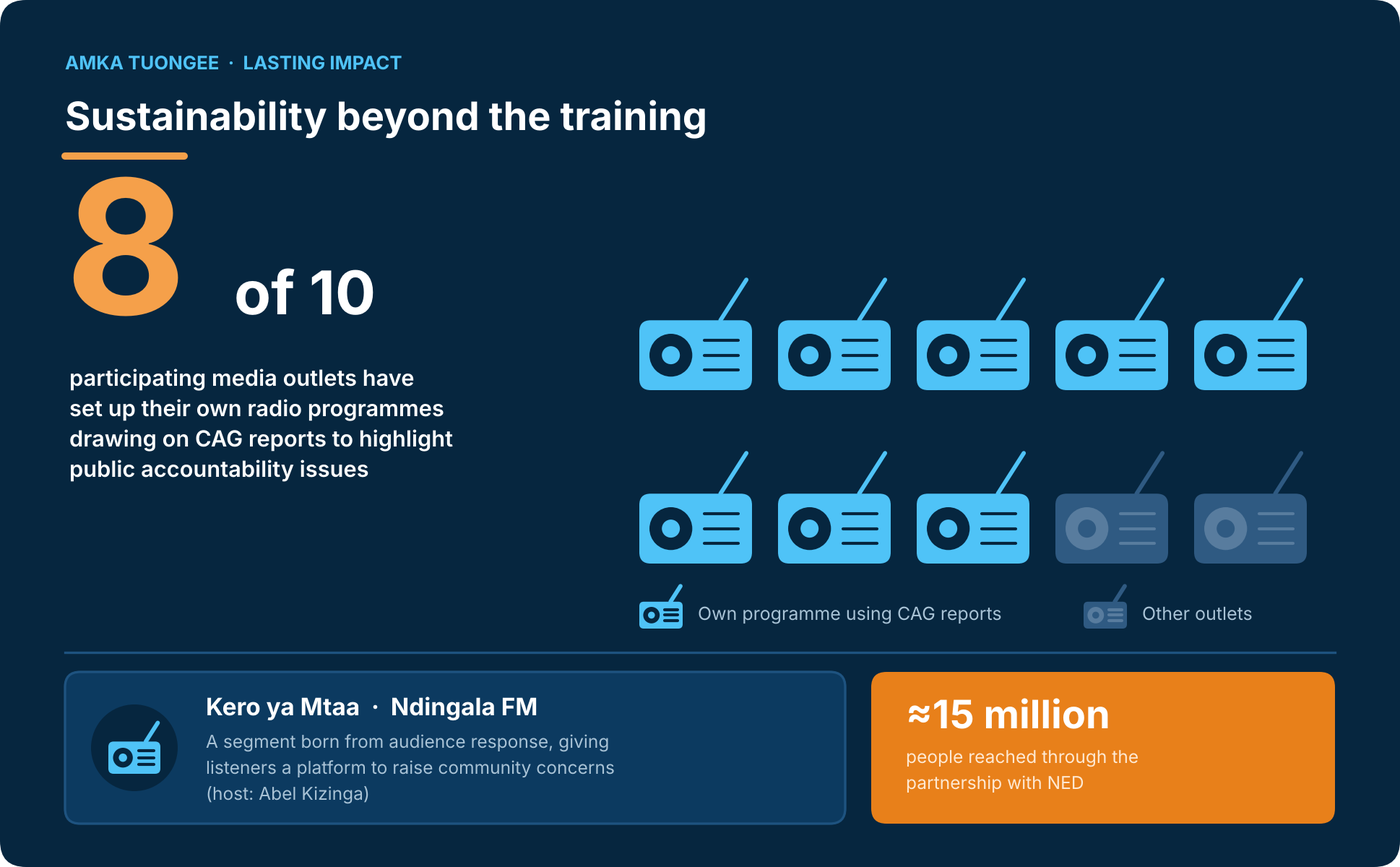
Ndingala FM, the station that followed up at Mkamanye Primary School, offers one example. There, the audience response to Amka Tuongee led to the creation of Kero ya Mtaa, a segment that continues to give listeners a platform to raise concerns affecting their communities.
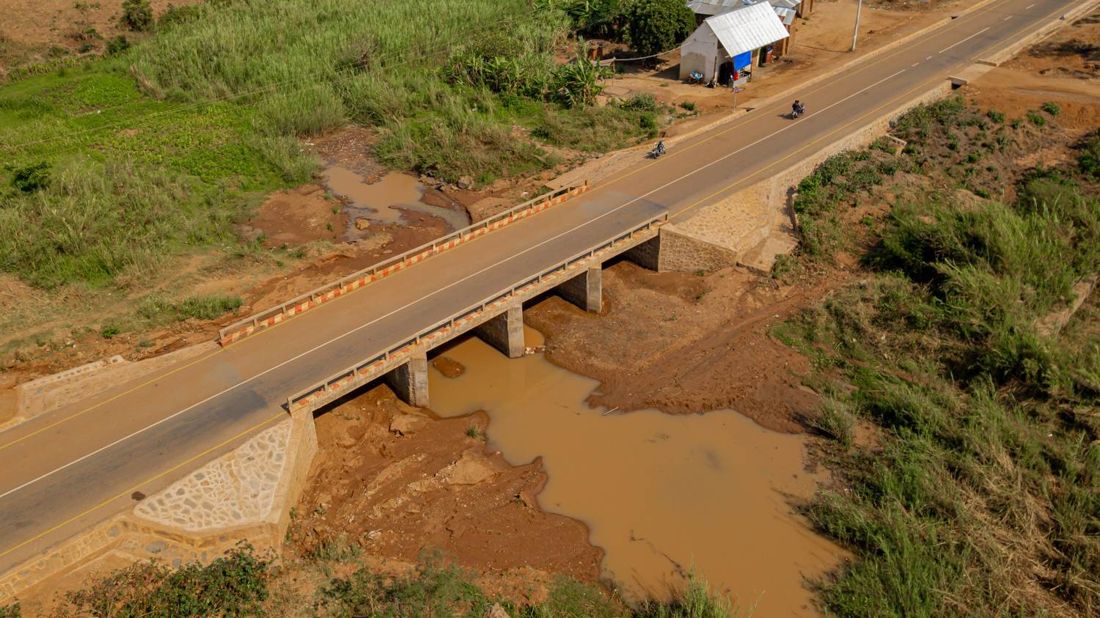
One of the major concerns raised through Kero ya Mtaa, hosted by Abel Kizinga, was the poor condition of Kasisi Bridge.
The experience shows how strengthening journalists’ skills can have an effect beyond the original training activities. Radio stations can continue using public audit reports to investigate concerns, while listeners can use these platforms to raise issues that might otherwise receive little attention.
Journalists do not replace the responsibility of Government and public institutions to deliver services. Their role is to assess information, ask questions, follow up on commitments and make it easier for communities to have their concerns heard. When this work is sustained, local media can contribute to stronger public oversight and more responsive service delivery.
Reflecting on the partnership, Moses Kimaro, Programme Manager at WAJIBU Institute, says:
“Throughout the implementation of the Amka Tuongee project, we have recognized the importance of NED’s support and sustained partnership. We also extend our appreciation to the journalists, community members, radio stations and listeners for their active engagement. Their participation has been instrumental in bringing community concerns into public discussion and strengthening accountability.”
Amka Tuongee is implemented by WAJIBU Institute of Public Accountability with support from the National Endowment for Democracy (NED).